Monday, January 16, 2012

Color Your Plate Healthy!


A great way to make sure your getting a healthy plate of food is to check out how many different colors are present.  A bright, colorful plate of food usually means you have a wide array of fresh fruits and vegetables packed full of essential vitamins and minerals.  But did you also know that certain colors correspond with certain great health benefits as well?  Lets take a look at the color guide below:
Food Color Guide:
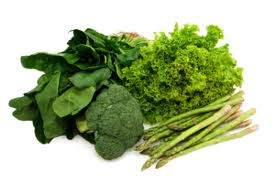
Green: Green produce indicates antioxidant potential and may help promote healthy vision and reduce cancer risks.
  • Fruits include: avocado, apples, grapes, honeydew, kiwi, and lime.
  • Vegetables include: artichoke, asparagus, broccoli, green beans, green peppers, and leafy greens such as spinach and kale.
Kale Krisp
6 cups fresh kale
2 tbsp olive oil
3 tbsp shredded parmesan cheese

1.)  Preheat oven to 350 degrees F.  Wash and chop kale into bite-sized peices.
2.)  Spread chopped kale evenly onto baking sheet and drizzle on olive oil.  Bake for 10 minutes, checking every 2-3 minutes.
3.)  Sprinkle on paremsan cheese and put back in oven for 1 minute to melt cheese.

**1 Serving = 1 cup

Calories: 33 kcal
Carbohydrates: 7g
Protein: 2g
Fat: 4g

    Orange and Deep Yellow: Orange and deep yellow fruits and vegetables contain nutrients that promote healthy vision and immunity and reduce the risk of some cancers.
    • Fruits include: apricots, cantaloupe, grapefruit, mango, papaya, peach, and pineapple.
    • Vegetables include: carrots, yellow pepper, yellow corn, and sweet potatoes.
    Banana Nut Smoothie
    2 bananas, ripe
    2 cups pineapple juice
    2 Tbsp Creamy peanut butter
    2 tsp plain yogurt
    1 ½ tsp vanilla extract
    6 ice cubes
    nutmeg

    1.)  Combine all ingredients, except nutmeg, in blender. Cover and run on high until smooth and well-blended. Sprinkle with nutmeg.

    **1 serving = 1 cup

    Calories: 177 kcal
    Carbohydrates: 17g
    Protein: 5g
    Fat: 5g

    Purple and Blue: Purple and blue options may have antioxidant and anti-aging benefits and may help with memory, urinary tract health and reduced cancer risks.
    • Fruits include: blackberries, blueberries, plums, and raisins.
    • Vegetables include: eggplant, purple cabbage, and purple-fleshed potato.

    Roasted Eggplant Dip
    1 medium eggplant (about 1 pound)
    9 green onions (white portion only)
    3 tablespoons reduced-fat plain yogurt
    1 tablespoon lemon juice
    1 tablespoon olive oil
    1/2 teaspoon salt
    1/4 teaspoon pepper
    3 tablespoons minced chives, divided
    Pita breads (6 inches), cut into 6 wedges
    Carrot sticks, optional

    1.)  Pierce eggplant several times with a fork. Place eggplant and onions in a shallow foil-lined baking pan. Bake at 400° for 25-30 minutes or until tender. Cool. Peel and cube the eggplant.
    2.)  In a blender, combine the yogurt, lemon juice, oil, salt, pepper, eggplant and onions. Cover and process until almost smooth. Add 2 tablespoons chives; cover and process until blended.
    3.)  Transfer to a serving bowl; sprinkle with remaining chives. Serve with pita wedges and carrots if desired.

    **1 serving = 1/4 cup dip with 6 pita chips

    Calories: 158 kcal
    Carbohydrates: 28g
    Protein: 5g
    Fat: 3g

      Red: Red indicates produce that may help maintain a healthy heart, vision, immunity and may reduce cancer risks.
      • Fruits include: cherries, cranberries, pomegranate, red/pink grapefruit, red grapes, and watermelon.
      • Vegetables include: beets, red onions, red peppers, red potatoes, rhubarb, and tomatoes.
      Louisiana Red Beans and Rice
      4 1/3 cups water, divided
      1 1/2 cups brown basmati rice
      1/2 teaspoon salt
      1 tablespoon extra-virgin olive oil
      1 cup diced onion
      2 teaspoons minced garlic
      2 15-ounce cans red kidney beans, or pink beans, rinsed
      6 ounces sliced Canadian bacon, chopped
      1/2 cup chopped celery, plus 1 tablespoon finely chopped celery leaves
      1/2 cup diced green bell pepper
      1/4-1/2 teaspoon ground chipotle pepper, or cayenne pepper

      1.)  Combine 3 1/3 cups water, rice and salt in a large saucepan. Bring to a simmer; reduce heat to low, cover and cook until all the water has been absorbed, about 45 minutes.
      2.)  About 10 minutes before the rice is ready, heat oil in a large skillet over medium-high heat. Add onion and garlic and cook, stirring, until the onion is lightly colored and tender, about 3 minutes.
      3.)  Place 1 cup beans in a small bowl and mash with a fork. Add the mashed and whole beans, the remaining 1 cup water, Canadian bacon, celery, celery leaves, bell pepper and ground chipotle (or cayenne) to taste to the pan. Simmer, stirring occasionally, until the liquid has thickened into a gravy and the vegetables are crisp-tender, about 6 minutes. Serve in shallow bowls, spooned over the rice.

      **1 Serving = 1 1/3 cup

      Calories: 342 kcal
      Carbohydrates: 57g
      Protein: 17g
      Fat: 5g

      White, Tan and Brown: White, tan, and brown foods sometimes contain nutrients that may promote heart health and reduce cancer risks.
      • Fruits include: banana, brown pear, dates, and white peaches.
      • Vegetables include: cauliflower, mushrooms, onions, parsnips, turnips, white‑fleshed potatoes, and white corn.
      Marinated Mushrooms
      1 pound small fresh mushrooms
      1 small onion, thinly sliced
      1/3 cup white wine vinegar
      1/3 cup canola oil
      1 teaspoon salt
      1 teaspoon ground mustard

      1.)  In a large saucepan, combine all ingredients. Bring to a boil over medium-high heat. Cook, uncovered, for 6 minutes, stirring once. Cool to room temperature. Transfer to a large bowl; cover and refrigerate overnight.

      **1 Serving = 1/4 cup mushrooms

      Calories:  69 kcal
      Carbohydrates: 3g
      Protein: 1g
      Fat: 6g

      Keep these guidelines in mind when your making your colorful plates of nutrient-dense foods!  Colorful plates of food are both beautiful and beneficial!

      Monday, January 9, 2012

      Failing Diets: New Research Can Explain Why


      We all know eating foods high in fat can lead to so many health complications, from obesity to heart disease.  It has been drilled into our minds over and over again, and yet, somehow we don't want to give up those tantalizing treats.  But according to researchers at the University of Washington, a high fat diet can lead to one more scary ultimatum: brain damage.

      Dr Michael Schwartz, a professor of medicine at the University of Washington, has lead a series of clinical studies in rodents and humans looking at the relationship between a high fat diet and the evidence of brain damage.  He is the senior author of a paper published Wednesday, January 4, 2011 in the Journal of Clinical Investigation.

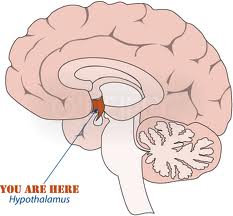
      The study has shown that after eating a high-fat meal, evidence of brain injury begins to appear after only 24 hours.  If individuals keep eating those high-fat foods continuously, the area of the brain that regulates weight, the hypothalamus, will show evidence of serious inflammation and structural damage.  The researchers say they've found the very first evidence that "hypothalamic neuron injury" (basically, this means injury to hypothalamic nerves) is associated with obesity caused by a high-fat diet in humans.  But what does this injury mean?  What are the side effects?

      First of all, let me repeat what I mentioned prior.  The hypothalamus regulates body weight.  This means injury to the hypothalamus could potentially cause an individual to be unable to internally regulate their own weight.  Every person is born with a genetic "set weight" that your body tries to maintain during the duration of your life.  This is why it is literally impossible for everyone to be the size of a fashion model, some people's set weights just won't allow them to be that skinny.  This inflammation that occurs in the hypothalamus disrupts that ability, so it is that much more difficult to get back to that set weight.

      Obese individuals seem to be biologically defending their elevated body weight.  It seems that the injury that occurred in the hypothalamus not only causes them to be unable to regulate their genetic set weight, but that injury also proposes a new set weight, one that is elevated to be comparable to their obese nature.  It may help explain why dieting and exercise often lead right back to a higher weight for obese individuals.

      The best diet is the one you don't know your on.  This research proves that eating a healthy diet and leading an active lifestyle can help you stay out of the yo-yo dieting spiral.  What can we do to make sure we don't get caught in the spiral?  Prevention, prevention, prevention!!!  Once you get to that obese point, it seems there is no bouncing back.

      Sun-Dried Tomato Stuffed Chicken
      Try this lowfat and brain-boosting chicken recipe!

      Makes 4 servings:

      1 pound skinned and boned chicken breast halves (4 breast halves)
      1/2 teaspoon salt, divided
      1/2 teaspoon pepper, divided
      1/2 of an 8-ounce package reduced fat cream cheese
      3 garlic cloves, minced and divided
      1/4 cup chopped sun-dried tomatoes (not in oil)
      1/2 cup chopped fresh basil, divided
      1/4 cup shredded Parmesan cheese
      Vegetable cooking spray
      6 roma tomatoes, chopped
      2 teaspoons olive oil
      2 teaspoons red wine vinegar

      1.)  Place chicken between 2 sheets of heavy-duty plastic wrap, and flatten to 1/4-inch thickness using a meat mallet or rolling pin. Sprinkle evenly with 1/4 teaspoon salt and 1/4 teaspoon pepper.

      2.) Stir together cream cheese, two-thirds of minced garlic, and sun-dried tomatoes. Spread cream cheese mixture evenly over one side of each chicken breast, leaving a 1/4-inch border. Sprinkle 1/4 cup basil and Parmesan cheese evenly over breasts; roll up, jellyroll fashion, and secure with wooden picks, if necessary. Arrange in an 8-inch-square baking dish coated with cooking spray.

      3.) Bake at 350° for 30 to 45 minutes or until chicken is done. Remove from oven, and let stand 10 minutes.

      4.) Stir together chopped tomatoes, olive oil, vinegar, remaining 1/4 teaspoon salt, remaining 1/4 teaspoon pepper, remaining one-third minced garlic, and remaining 1/4 cup basil.

      5.) Cut chicken into slices. Serve with tomato mixture.

      Per Serving:
      Calories = 284
      Fat = 11g (Saturated fat = 5g)
      Protein = 33g
      Carbohydrate = 14g
       

      For more information visit: 
      http://seattletimes.nwsource.com/html/localnews/2017122171_brain30m.html
      http://www.jci.org/articles/view/59660

      Monday, January 2, 2012

      Dying to be Thin

       
      The friend who has lost over 20 pounds in the past month.  The mother who is criticizing her daughter about every empty calorie she eats.  The brother who obsesses over the scale for the wrestling team.  All these scenarios are more real and more prevalent than most people may think.  Most of you reading this probably know a person who suffers from an eating disorder.  The question is...are you catching the signs?  Or are you pushing the red flags under the rug?  Its easier to pretend it doesn't exist than to face it head-on.

      Obsessions with body image are beginning at younger and younger ages every year.  The median age of onset for eating disorders across the population ranges from 18 to 21 years, depending on the condition, with the earliest onset at 10 years for anorexia nervosa and 15 years for other disorders.  Up to one in four 11-year olds has already tried to diet once.  Can you imagine your 5th grade daughter coming home from school and refusing to eat day after day because someone made fun of her for being fat?  That's the recipe for a parent's worst nightmare.

      What Specifies an Eating Disorder?
      Just because you see someone walking down the street who is extremely thin, does not necessarily automatically indicate that person suffers from an eating disorder.  According to the Diagnostic and Statistical Manual of Mental Disorders (DSM IV), the following are the specific criteria:

      Anorexia Nervosa
      • Exaggerated drive for thinness
      • Refusal to maintain a body weight above the standard minimum (<85% of expected weight)
      • Intense fear of becoming fat with self-worth based on weight or shape
      • Evidence of an endocrine disorder
       Bulemia Nervosa
      • Overwhelming urges to overeat and inappropriate compensatory behaviors or purging that follow the binge episodes 
      • Similar to anorexia nervosa, individuals also display psychopathology, including fear of being overweight 

      Although there is no perfect "concoction" of traits an individual has that causes an eating disorder to develop, there are some risk factors that have been identified as being common with the majority of individuals who suffer.  Some include: being female, family history, family influences, dieting, change/transitions in life, or emotional disorders.  Keep in mind, some individuals may have many or all of those risk factors and never develop an eating disorder, and some individuals may only have one risk factor and suffer from an eating disorder their entire life.  It is entirely subjective.

      I know what most of us are thinking...how does anyone really get sucked into that black hole of a disease??  How would you not realize what that person was going through?  How are you not able to shake them until they start making some sort of sense?  Below is an exerpt written by an individual suffering from an eating disorder, it may shed some light into the dark corners of how an eating disorder thinks:

      How It Feels...
      Eating disorders are diseases of silence. We are all silently screaming for something: attention, love, help, escape or forgiveness. Although we might be looking to fill different voids, we never ask for the things we need. We feel unworthy, that for some reason we don't deserve them. So, we play the game of guess what I need from you. You're inability to guess just feeds our feelings of worthlessness.

      When you finally realize there is a problem, it is much too late. We will now fight, lie, and cheat to hold on to the one thing that has given us support. You see the symptoms, weight loss, weight gain, or depression. You watch us starve, eat, purge, and isolate. You tell us to eat or not eat, to sleep or to get up and do something, you can't understand why we can't just get better.

      If it were only that easy! Some of us have been living with this, like this, in this hell for half our lives or more. We honestly believe it is the thing holding us together. Even when all others see it as the thing that's making us crumble to pieces. It is not just a part of us, but it has become us. It is our identity and who are we without it? Many of us are afraid to find out. Fearing without it we are nothing.

      It becomes our sole companion. It is the thing that makes us strong, so that we don't need, don't want and don't feel. It is our cape of invisibility. With it on you can not see us, you can not see our pain and shame, we begin to disappear. Slowly at first and then before you know it we are gone. Lost in a world of pain. Always fighting for control that we never seem to get.

      In the beginning the control is easy and the high from it incredible. I can not eat for 4 days, I can exercise for 4 hours a day, or I can throw up everything I eat. I am in control. But somewhere along the road we lose that control and the eating disorder takes on a life of its own. We no longer control it. It controls us. We wake in the morning hearing it's voice and can't sleep at night because that voice is too loud.

      We stop listening to anybody except our eating disorder. We believe we are fat, useless, unworthy, unlovable, and weak. We honestly believe that losing weight will on some level make things better. We wake up with thoughts of food; they consume us all day long, and often cause sleepless nights. It becomes all that matters. We listen to the voices that constantly tell us we are not good enough, thin enough, strong enough, a little more and then we can stop. But there's always a little more and it doesn't stop.

      Although we say we hate the voices and the disorder. We don't hate it all. We love the high of seeing the number go down. We long for that empty, numb feeling that comes with starvation. We thrive on what begins as compliments and turns to worry about our weigh loss. Nothing gets rid of feelings the way throwing up does. The disorder is the thing that makes us feel strong and special, while at the same time letting us disappear and run away from life.

      We will say we don't want your help. Sometimes because we are in denial and actually believe things are fine, sometimes we feel guilty receiving help, because we feel unworthy, and sometimes it has just gone on so long that we have given up hope and accepted that "I will live with this until it kills me".

      When we say we don't want your help, those are the times we need it the most. We need you to stand up for us when we can barely stand, love us when we hate ourselves, hold our hope when we feel hopeless, and never give up on us, the way we give up our ourselves.

      Wow...Scary Stuff, Right??

      But if these individuals really don't want to change (as evidenced by the commentary above), or are trying to convince themselves that they don't, what can we actually do to help them?  Is there any hope? 

      Prevention is the key word in this situation!  If there is a way to prevent the onset of an eating disorder prior to the disordered behavior and thinking, that makes all the difference!  Parents talking with young kids about the importance of nutrition AND modeling the good behavior, having topics relating to eating disorders in health classes in elementary schools, and being focused on prevention in the young girls in weight-related sports (i.e. ballet, gymnastics, and ice skating) should be stressed.  This may sound way too aggressive (why put thoughts into a child's head that weren't there before?) but it is essential.  Some specific steps to help prevention are:

      1. Enlist your child's doctor for help. At well-child doctor visits, pediatricians may be in a good position to identify early indicators of an eating disorder and prevent the development of full-blown illness. 
      2. Encourage healthy-eating habits. Family dining habits may also influence the relationships children develop with food. Eating meals together gives you an opportunity to teach children about the pitfalls of dieting, and encourage healthy eating.
      3.  Keep an eye on computer use. Because there are numerous Web sites that promote anorexia (commonly called "pro-ana" sites) as a lifestyle choice rather than an eating disorder, it's important to monitor your child's computer use.
      4. Cultivate and reinforce a healthy body image in your children, whatever their shape or size. Talk to children about their self-image and offer reassurance that body shapes can vary. Encourage your own children or family members to refrain from joking about other children or adults who are overweight or have a large body frame. 
       About 10-20% of individuals suffering from an eating disorder will never recover, and those who do will most likely relapse at some point in their life.  Unfortunately, around 5-10% of individuals will die.  Be proactive and a healthy role model for our young kids.  You might be their only hope.

      Monday, December 26, 2011

      Its That Time of Year: How to Make a SMART New Year's Resolution


      Its that time of year once again...time to make a New Year's Resolution!  But what should you resolve to do this year?  Lose weight, eat better, exercise...blah, blah, blah.  You make the same resolutions every year and by the end of January, it has all gone out the window already.  How can you make a genuine resolution and keep it up?  Is it even possible?  Of course!

      Be Specific!   
      Don't generalize!  Give yourself a specific goal to attain for the new year.  Instead of making your resolution to "eat better", give yourself guidelines such as "half of my plate will be either fruits or veggies for dinner every night" or "each month I will try a new vegetable recipe".  Having a more specific goal in mind will keep you on track and make it easier to attain in the long term.

      Can you Measure it?
      Don't just make a resolution to "lose weight."  Make your resolution something that you can actually measure throughout the year so you can see the success as it happens.  Make a vow to try and lose 4 pounds each month and make sure to reward yourself as you see the results.  Giving yourself a measurable resolution will help to motivate you throughout the year. 

      Is it Achievable?
      Can you even do it?  So many of us make resolutions that even Santa himself couldn't do.  If your resolution is to lose 100 lbs in the new year, chances are you won't achieve that obstacle.  Set yourself up to succeed!  This way, as you start seeing and feeling the results of the changes, the better you will feel about yourself.  Once that resolution is achieved, you will feel that great sense of accomplishment.  Give yourself that warm fuzzy feeling!

      Make it Realistic.
      Don't be too hard on yourself, your only human!  Making an unrealistic and out-of-reach resolution will only cause stress and disappointment when you cannot achieve it.  Understand your limitations and plan accordingly.  If your career does not allow you to be able to leave during the work day, don't make your goal to work out three times per day at the gym, you are setting yourself up for failure to begin with.  Make your goal small at the get-go and allow yourself to be able to build upon it as you feel you can.  Start out with running around the block every morning before work and by the time summer rolls around you may be running 3 miles every morning!

      Give it a Time line!
      Boundaries are your friend!  If the resolution doesn't have an endpoint, there's no way to really measure or account for the change.  Instead of saying "I will write and publish a review article for the Journal of the American Dietetic Association" you could say "By May I will have all the research done for a review article for the Journal of the American Dietetic Association, and the first draft will be written by December".  This way, you have a deadline to keep you honest.

      Keeping these guidelines in mind will help you make and keep a SMART New Year's Resolution.  Keep in mind that if you really want this change to stay with you throughout the year, it also needs to be relevant to you and important.  Make this a lifestyle change and you will see results immediately.  Stay healthy!

      Monday, December 19, 2011

      What Came First - Christmas or the Eggnog?


      We all know this time of year is associated with many interesting holiday traditions, whether it be food, drink, or decorations.  During December many of us enjoy hot apple cider, hot cocoa, and of course, eggnog!  But what really is eggnog and why do we drink it around this time of year?

      What is Eggnog?
      Eggnog is a sweetened, dairy-based beverage, traditionally made with milk, and/or cream, sugar, beaten eggs (hello salmonella!), and liquor.  Usually the liquor used in eggnog is either brandy, rum or whiskey.  The finished serving is usually topped with a sprinkling of ground cinnamon and/or nutmeg.

      The History of Eggnog
      The actual origins and ingredients that were used to make the first eggnog drink are still debated.

      One story claims that Eggnog may have originated in East Anglia, England; or it may have simply developed from posset, a medieval European beverage made with hot milk.  The "nog" part of its name may stem from the word "noggin", a Middle English term used to describe a small, carved wooden mug used to serve alcohol.  However, the British drink was also called an Egg Flip (from the practice of "flipping" (rapidly pouring) the mixture between two pitchers to mix it).

      Another story is that the term derived from "egg and grog", a common Colonial term used for the drink made with rum. Eventually that term was shortened to "egg'n'grog", then "eggnog".

      In Britain, the drink was popular mainly among the aristocracy; dairy products and eggs were rarely consumed by the lower classes due to their high cost and the lack of refrigeration.  Those who could get milk and eggs mixed it with brandy, Madeira or sherry to make a drink similar to modern alcoholic egg nog.

      The drink crossed the Atlantic to the English colonies during the 18th century. Since brandy and wine were heavily taxed, rum from the Triangular Trade with the Caribbean was a cost-effective substitute.  The inexpensive liquor, coupled with plentiful farm and dairy products, helped the drink become very popular in America.  When the supply of rum to the newly-founded United States was reduced as a consequence of the American Revolutionary War, Americans turned to domestic whiskey, and eventually bourbon in particular, as a substitute.

      Why Eggnog for Christmas?  The Story Goes a Little Like This...
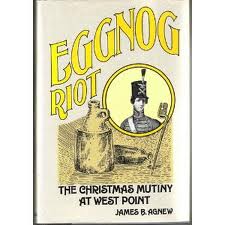
      Christmas of 1826 was snowy, cold and lonely for the cadets of West Point. Though called "men" they were really teenage boys - some as young as 17 - and they wanted to celebrate Christmas. Young Jefferson Davis, future president of the Confederate States of America, was amongst them.

      But West Point then, as it is now, was a house of order and discipline. The military academy was under the strictest orders of sobriety that Christmas season. And being young men some took it upon themselves to challenge those orders in the name of holiday celebration. They organized and they partied.

      During excused absences the men of West Point would visit area taverns and drink grog - a mix of alcoholic spirits and spices whose many differing recipes came over from the Old World of England in those post-revolutionary times. But for their clandestine Christmas celebration of 1826 they sought to make eggnog - a creamy mixture of typical grog ingredients combined with milk, cream and eggs. Military tradition had passed down rumors of a fancy for the drink from George Washington himself, whose stiff recipe challenged even the heartiest drinker. It was the seasonal tradition of Christmas in colonial America and for these boys it was a sentimental taste of home.

      Carefully they planned their party. The ingredients were brought in under cover of darkness, at varying times and by the hands of several individuals. On Christmas Eve they posted guards to look out for watchful superior officers, blackened their windows and began mixing their eggnog. Their party proceeded unnoticed until 4:30 in the morning when the effects of their celebration started to take effect rather noisily. By that point keeping the officers from noticing was impossible. What ensued thereafter has come to be known in legend as the Eggnog Riot. One cadet ended up facing murder charges by the time it was said and done. Six others resigned and 19 others were court martialed. And many, including Jefferson Davis, received the punishment of being confined to quarters for more than a month.

      But many, even some of those expelled from the academy, expressed no regret for their involvement in the event. It was after all Christmas. And it was, after all, only eggnog.

      Eggnog was one of the most common holiday traditions of Colonial America. Before there were Christmas trees, before there was Santa Claus, and long before there was ever a national holiday called Christmas there was the annual tradition of eggnog. 

      George Washington's Eggnog
      He was famous, especially after the Revolutionary War, for holding festive Christmas gatherings featuring his unique brand of eggnog.

      2 cups brandy
      1 cup rye whiskey
      1 cup dark Jamaica rum
      1/2 cup cream sherry
      8 extra large eggs OR 10 large eggs
      3/4 cup sugar
      1 quart milk
      1 quart heavy cream
      1 teaspoon fresh ground nutmeg
      1 cinnamon stick

      1.) Mix liquors first in a separate container. Separate yolks and whites into two large mixing bowls. Blanchir egg yolks (beat adding in sugar until the mixture turns a light yellow). Add liquor slowly to egg yolk mixture, continuing to beat (mixture will turn brown) until well incorporated. Add milk and cream simultaneously, slowly beating the mixture. Set aside.

      2.) Beat whites of eggs until stiff and fold slowly into the alcohol mixture. Add nutmeg and cinnamon stick, and stir well to incorporate. Cover mixture in an airtight container.

      3.) Allow egg nog to cure undisturbed for several days (4-7) in the coldest part of the refrigerator, or outside in a very cold (below 40 degrees) place. The mixture will separate as it cures. Before serving cold, re-incorporate the mixture and enjoy! 

      Eggnog - A Lighter Version
      Try this sophisticated and safe low-fat version of the classic eggnog, with half the calories!

      6 cups milk (1%)
      1/8 teaspoon freshly grated nutmeg
      2 large eggs
      2/3 cup sugar
      2 tablespoons all-purpose flour
      1/4 teaspoon salt
      1/4 cup brandy, bourbon or rum
      2 teaspoons vanilla extract
      1/4 cup light whipping cream

      1.) Bring milk and nutmeg to a simmer in a heavy medium saucepan over low heat, stirring occasionally.

      2.) Whisk eggs, sugar, flour and salt in a large bowl until smooth. Whisking constantly, gradually add hot milk; return mixture to saucepan.

      3.) Cook the eggnog over very low heat, stirring constantly, until thick enough to coat the back of the spoon, 10 to 15 minutes. (Temperature must reach 160°F; do not let eggnog come to a simmer.) Remove from the heat and pour through a fine-meshed sieve into a bowl.

      4.) Whisk in brandy (or bourbon or rum) and vanilla. Place a piece of plastic wrap directly on the surface of the eggnog and refrigerate until chilled, for at least 8 hours or overnight.

      5.) Just before serving, add cream to eggnog. Ladle into cups and serve garnished with more grated nutmeg. 

      Calories: 142 kcal
      Fat: 4g

      Traditional Eggnog:
      Calories: 300 kcal
      Fat: 20g   

      Sunday, December 11, 2011

      Skinny Seasonal Spirits

      'Tis the season...to consume that booze!  This time of year there are plenty of Christmas and New Years parties to attend and all of them include copious amounts of alcohol to drink.  But as we all know, alcohol is not calorie-free and consuming 2, 3, 4, or maybe 5 drinks per night can start to add up. 

      Pomegranate Champagne Punch
      Pump some antioxidants into your punch with this refreshing, fizzy drink.

      2 cups champagne
      1 cup pomegranate juice
      1 cup seltzer
      1/2 cup citrus vodka
      Lemon twists, for garnish

      Combine champagne, pomegranate juice, seltzer and vodka in a large bowl or pitcher. Serve over ice with a twist of lemon.

      Serving Size: 3/4 cup
      Calories: 128 kcal
      Carbohydrates: 7g
      Sodium:  5mg

      Whispering Wreath
      This warm mixture is a distinctive twist on the classic hot buttered rum.

      1 cup sugar
      1/4 cup fresh mint leaves, plus 10 for garnish
      1/4 cup fresh sage leaves
      4 cups water
      10 dashes bitters
      12 ounces dark rum (1 1/2 cups)
      2 tablespoons butter

      1.)  Using a muddler or large wooden spoon, mash sugar and herbs together in a large saucepan until the herbs are bruised and fragrant.
      2.)  Add water and bitters; bring to a simmer over medium-high heat, stirring often, about 5 minutes. Stir in rum and cook for 1 minute. Add butter and cook, stirring, until it melts.
      3.)  Strain the mixture into a pitcher. Let stand for about 10 minutes to mellow the flavors. Serve in cordial glasses or other small heat-safe glasses, garnishing each drink with a mint leaf.

      Serving Size: 1/2 cup
      Calories: 178 kcal
      Carbohydrates: 20g
      Sodium: 4mg

      Pear-Ginger Shooters
      Fresh ginger and fragrant cinnamon infuse this chilled pear soup. Serve it in large shot glasses.  Guests can add a splash of vodka as they take one.

      4 ripe pears, peeled and quartered
      1 cup apple cider
      1 cup dry white wine
      1-2 tablespoons minced fresh ginger, or ginger juice
      1 tablespoon lemon juice
      1 4-inch cinnamon stick
      1/4 teaspoon salt
      1 1/2 tablespoons honey

      1.)  Stir pears, cider, wine, ginger (or ginger juice) to taste, lemon juice, cinnamon stick and salt in a large saucepan; bring to a simmer over medium-high heat. Cover, reduce heat, and gently simmer until the pears are very tender, about 20 minutes.
      2.)  Discard the cinnamon stick. Pour the soup into a large blender or food processor; add honey. Blend or process until smooth. (Use caution when pureeing hot liquids.) Pour into a large bowl, cover and refrigerate until cold, at least 4 hours. Pour into small glasses to serve.

      Serving Size: 1/3 cup
      Calories: 67 kcal
      Carbohydrates: 14g
      Sodium: 50mg

      Monkeylada
      If you like piña coladas, try this lower-calorie version using ripe bananas blended with fresh pineapple and coconut milk. Serve it in festive tropical-drink glasses.

      2 very ripe bananas
      1 cup diced fresh pineapple, plus 4 wedges for garnish
      1 cup pineapple juice
      1/2 cup lite coconut milk
      3 cups ice cubes
      6 ounces (3/4 cup) light rum

      Puree bananas, diced pineapple, pineapple juice, coconut milk and ice in a blender. Stir in rum. Divide among 4 glasses. Garnish with pineapple wedges.

      Serving Size: 1/2 cup
      Calories: 228 kcal
      Carbohydrates: 28g
      Sodium:  12 mg

      Very Merry Punch
      There was a time when every household had its own recipe for spiced hot-wine punch. Folks would roam from house to house testing each one. With the blend of flavors in this punch, revelers might never move on to other houses on the block.

      1 1/2 cups water
      1 cup packed light brown sugar
      2 750-ml bottles hearty red wine, preferably Cabernet Sauvignon
      1 apple, sliced
      1 orange, halved and sliced
      1 cup pineapple chunks, fresh or canned
      4 whole star anise
      1/2 cup orange curaçao

      1.)  Place water and brown sugar in a Dutch oven. Cook over medium-high heat, stirring often, until the sugar has dissolved, about 2 minutes.
      2.)  Add wine, apple, orange, pineapple and star anise. Reduce the heat to medium and cook for 10 minutes.
      3.)  Stir in orange curaçao and cook for 5 minutes more. Discard star anise. Serve the punch in heat-safe wineglasses or coffee cups, spooning a little fruit into each glass.

      Serving Size: 3/4 cup
      Calories: 199 kcal
      Carbohyrdates: 27g
      Sodium:  11mg

      Spiced Hot Cider
      Try this classic holiday drink, without the guilt!


      4 cups apple cider
      1 cinnamon stick
      5 whole cloves
      1/2 cup applejack, (apple brandy)
      2 tablespoons cinnamon schnapps
      Cinnamon sticks, for garnish

      Bring apple cider, cinnamon stick and cloves to a boil. Reduce heat and simmer for 5 minutes. Add applejack and schnapps. Garnish with a cinnamon stick and serve hot.

      Serving Size: 3/4 cup
      Calories: 143 kcal
      Carbohydrates: 23g
      Sodium: 0mg

      This year, don't feel quite so guilty when you grab for those cocktails at your Holiday parties.  You can have a great time without having to worry about what its doing to your waistline!  Enjoy them all in moderation.

      Monday, December 5, 2011

      'Tis the Season...To be Stressed!!


      This time of year, there's always one more thing that needs to get done in a day that doesn't have enough hours to begin with.  Getting all that extra work done in the office, that Christmas party your spouse volunteered you to host, all the extra practices your kids have for sports, the mounting pile of laundry in the corner of the laundry room, sending out Christmas cards...should I go on?  But what about finding time to breathe and de-stress?  When does that fit in to your busy schedule?

      Stress Can Be Both Mental and Physical
      Physical stress can result from not enough sleep, too much to do, a poor diet, or effects from an illness.  Mental stress can result from worrying about money, a loved one's illness, or experiencing an extremely emotional event, such as being fired from your workplace.  

      Quite a bit of our stress comes from less dramatic, everyday activities.  Obligations and pressures which are both physical and mental are not always obvious to us.  In response to these daily pressures, our body has automatic reactions including increased heart rate, blood pressure, respiration, metabolism, and blood flow to the muscles.  These reactions are intended to help your body react quickly and effectively to a high-pressure situation.

      However, when you are constantly reacting to stressful situations without making adjustments to counter the effects, you will feel stress which can threaten your health and well-being.  It is essential to understand that external events, no matter how you perceive those events, may cause stress. Stress often accompanies the feeling of “being out of control.”

      Coping with Stress During the Holidays
      Before you end up hitting that panic button and going over the edge this holiday season, here are some ways to keep that stress in check a little better:
      • Keep expectations for the holiday season manageable. Try to set smart, realistic goals for yourself. Pace yourself. Organize your time. Make a list and prioritize the important activities.
      • Be realistic about what you can and cannot do. Don’t put the entire focus on just one day (i.e., Christmas Eve Day). Remember that it’s a season of holiday sentiment, and activities can be spread out to lessen stress and increase enjoyment.
      • Remember the holiday season does not banish reasons for feeling sad or lonely; there is room for these feelings to be present, even if the person chooses not to express them.  Even if you choose not to express them, acknowledge they are there and you feel this way.  Don't push them down and ignore them.
      • Get enough sleep!  I know this sounds like an impossible task, especially around the holiday season, but sleep is essential for your body to handle any negative stressors that come your way.  Plan your sleep schedule right into your day!
      • Spend at least 5 minutes per day dedicated to "you time".  Sit in your favorite comfy chair, or maybe in your favorite spot in the house.  Close you eyes and focus on your breathing.  Maybe light a couple of candles or recite a favorite quote.
      • Take a walk!  Walking can change body chemistry in a way that calms the nervous system and reduces stress levels. Aerobic exercise is especially good for producing endorphins in the body - which are natural soothing hormones released during sustained exercise.
      •  Make yourself some chamomile tea.  Chamomile has been proven to have nerve-soothing properties, which help relieve anxiety and stress. 
        We all experience a certain amount of stress during the holiday season, some more than others.  The better we are able to deal with stressors in our lives, the more we will be able to enjoy ourselves and the more others will enjoy us as well, especially around the Holidays.   Keep that positive attitude and you can get through it!!